On May 24, Catholics around the world celebrate the solemnity of Pentecost — the day on which the Holy Spirit descended upon the disciples of Christ who gathered in Jerusalem 50 days after his resurrection on Easter Sunday.
At Pentecost, there “appeared to them tongues as of fire … and they were all filled with the Holy Spirit and began to speak in different tongues.” The gift of tongues allowed them to speak and for every person gathered to hear them “in his own native language.”
“Repent and be baptized, every one of you, in the name of Jesus Christ for the forgiveness of your sins; and you will receive the gift of the Holy Spirit,” St. Peter said in Acts 2:38-39. “For the promise is made to you and to your children and to all those far off, whomever the Lord our God will call.”
Pentecost is considered the birth of the Church, and the gift of tongues allowed Christians to embark on their mission to convert all nations by removing the impediment of language barriers united under the guidance of the Holy Spirit.
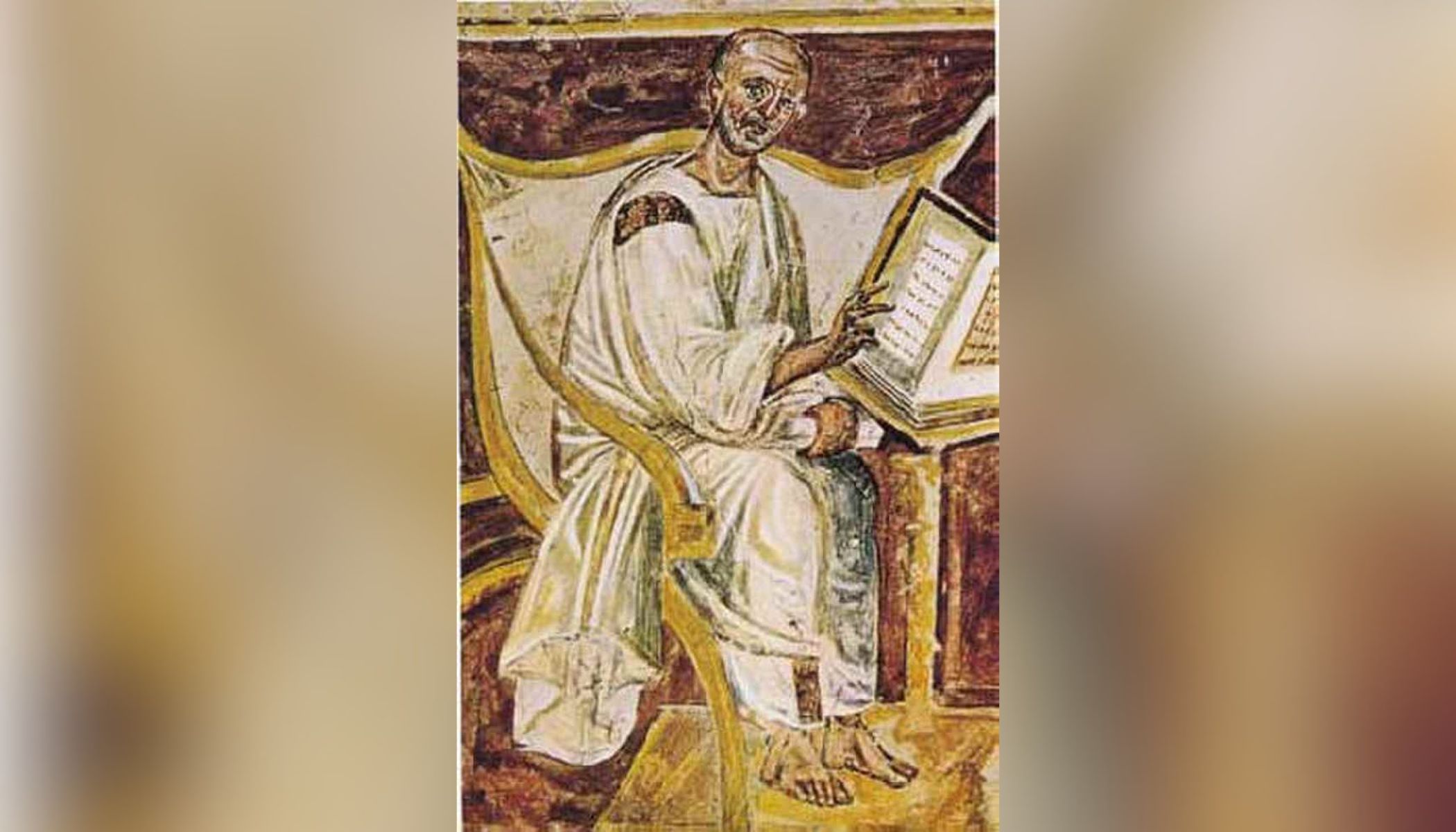
St. Augustine of Hippo — the fourth- to fifth-century bishop, theologian, and philosopher — wrote about the solemnity in sermons in the late 300s and early 400s. He contrasted the gift of tongues with the chaos established in Genesis 11 when God punished humanity with separate languages for trying to construct the Tower of Babel to reach heaven.
In Sermon 271, Augustine explains that after the Flood, “the ungodly pride of men built a high tower against the Lord, and the human race was deservedly divided by languages, so that each nation would speak its own language and thus not be understood by the others.”
Augustine contrasts the pride of humanity in Genesis with “the devout humility of the faithful” who gathered together 50 days after the resurrection of Christ. At Pentecost, that humility prompted God to instill the gift of tongues to bring unity to the Church despite “the variety of their different languages,” he writes.
With this gift, the theologian explains, “the scattered members of the human race, as of one body, might be attached to their one head, Christ, and so reunited, and fused together into the unity of the holy body by the fire of love.”
“Whoever received the Holy Spirit, even as one person, started speaking all languages,” he writes. “So too now the unity itself is speaking all languages throughout all nations; and it is by being established in this unity that you have the Holy Spirit; you that do not break away in any schism from the Church of Christ which speaks all languages.”
In Sermon 267, Augustine writes that at the Pentecost, “the Church was then in one house.” He adds: “That small church spoke in the languages of all nations” and 400 years later, “this great Church now speaks in the languages of all nations from the rising of the sun to its setting.”
The growth of the Church over those four centuries, Augustine writes, is a fulfillment of God’s promise to reach across nations and languages: “You were promised to yourself: but promised in few, fulfilled in many. The Holy Spirit is the soul of the body of the Church.”
In Sermon 268, Augustine expands on how the Pentecost points to the necessity of unity in the Church under the Holy Spirit, writing that it showed “the unity of the Church in the tongues of all nations” in a small room following Christ’s resurrection. Now we see “the unity of the Catholic Church, spread throughout the whole world.”
“The duties of the members are distributed, but one spirit contains all,” he continues. “Many commands are given, many things are done: One commands, one is served. That is our spirit, that is, our soul, to our members; this is the Holy Spirit to the members of Christ, to the body of Christ, which is the Church.”
Augustine is one of the Church’s greatest theologians and philosophers. He strongly influenced the Catholic understanding of the Trinity and the Holy Spirit more specifically, with writings such as “On the Trinity.”
Pope Leo XIV, the first Augustinian pope, discussed Augustine’s writings about Pentecost in a homily on Sept. 1, 2025, telling his Augustinian brothers: “You are members of the body of Christ, who speaks all languages.”
“If not all those of the world, certainly all those that God knows to be necessary for the fulfillment of the good that, in his provident wisdom, he entrusts to you,” Leo said. “Live these days, therefore, in a sincere effort to communicate and to understand, and do so as a generous response to the great and unique gift of light and grace that the Father of heaven gives you by summoning you here, specifically you, for the good of all.”